
Connected Devices & IoT
EV Charging Station Display Software and OCPP Architecture
EV charger software design with QR and RFID session initiation, live charging data, OCPP connectivity, payment, remote management and secure demo coverage.
Short answer
From charging screen to operation platform
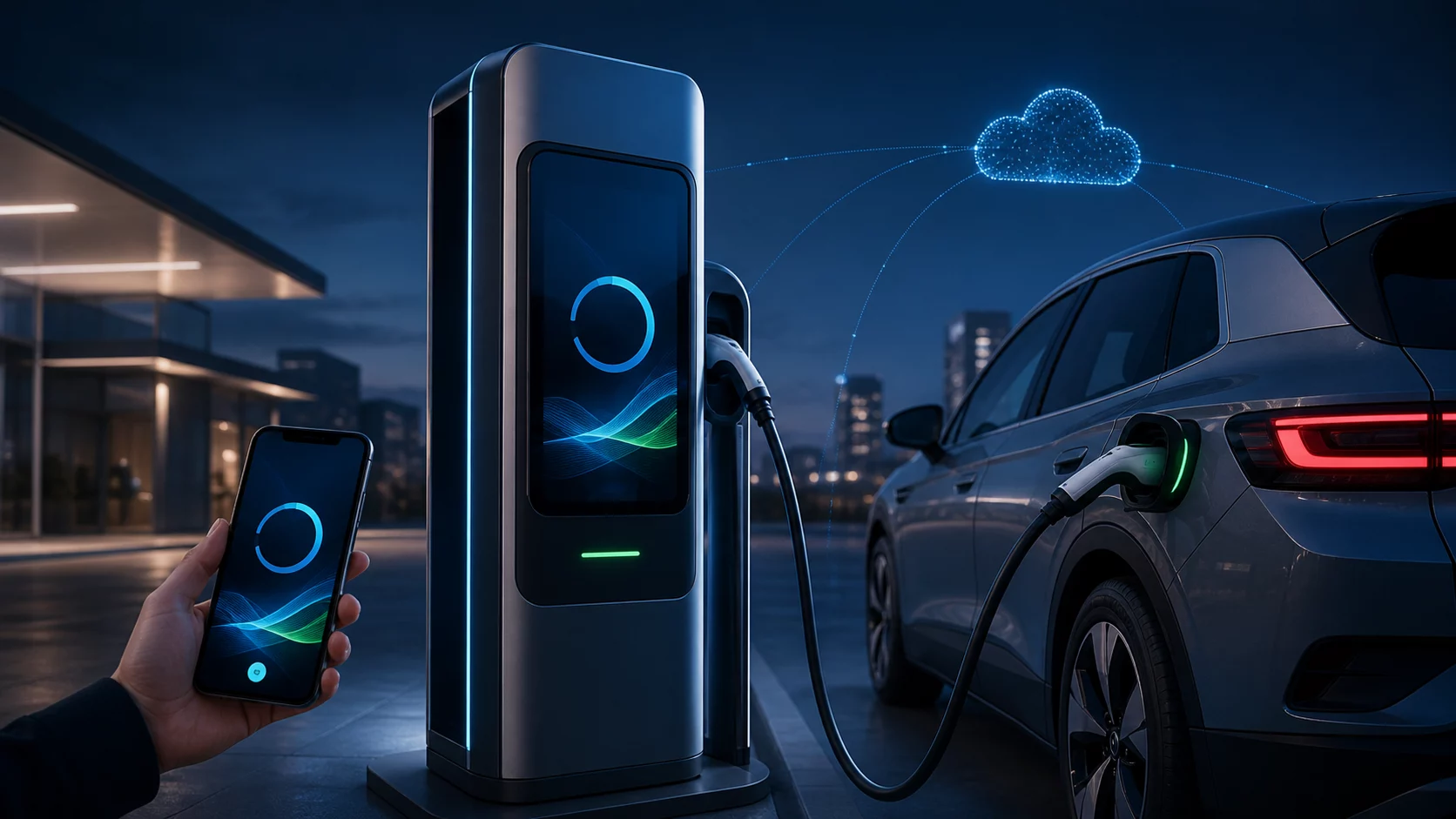
EV charging station software offers the driver connector selection, QR or RFID authorization, charging start, power, energy, duration, charge and stop flows. The station controller, central charging management system, payment provider and mobile application work together in the background. The demo prototype should be prepared with a safe charger simulator instead of real high-power hardware.
Layered architecture and liability boundaries
Touch HMI manages user experience; Power electronics, contactors, insulation monitoring and electrical safety remain on the charger controller side. The local service translates the manufacturer protocol into a common state model between the display and the controller. Charge Point Management System manages station ID, connector status, authorization, session and remote commands via OCPP. The mobile application and admin panel are connected not directly to the device controller, but to the authorized backend API layer.
OCPP events and charging session data model
The OCPP version to be applied is selected according to manufacturer and operator requirements. The common model includes the ChargingStation, EVSE, Connector, AuthorizationToken, ChargingSession, MeterSample, Tariff, and FirmwareRelease entities. The station sends boot notification, transmitting status changes and counter samples; Manages backend authorization and remote start/stop requests. Energy, time and fee data of each session are stored in an auditable form.
Connection loss, payment and security
The station must be able to maintain the current session and buffer meter samples according to secure local rules when the internet goes out. New session authorization behavior depends on operator policy. Payment data should not be kept in the charger application; tokenized provider stream must be used. TLS, device certificate, secure boot, signed firmware, role-based management and audit trail for all remote commands are basic requirements.
Demo software presentation
The presentation shows the on-screen application, OCPP-compatible simulator, mobile user flow and fleet dashboard together. The driver scans the QR, selects the connector and starts the session. The simulator increases energy values with power; the screen and mobile application show the same data live. The station is switched to in use, available, faulty and offline status from the admin panel. In the last step, the session receipt and energy summary are created.
Testing, certification and field pilot
Validated through state machine unit tests, OCPP message compliance integration tests, and long-term connection tests. Power outage, backend inaccessibility, corrupted counter value, double stop request and firmware update error scenarios are run. Prototype does not imply commercial charger certification; Electrical safety, measurement, payment and regulatory requirements must be completed with the hardware manufacturer, operator and authorized bodies.
Productization and commercial narrative
The initial product suite may include a brandable charger UI, OCPP connectivity layer, basic fleet dashboard, and mobile web experience. In the next phase, dynamic tariff, reservation, load management, campaign and maintenance analytics are added. Beyond the charging screen, the presentation should emphasize station usability, remote operation, faster fault detection, and common user experience across different hardware models.
Frequently asked questions
Do EV charger demo require real power electronics?
No. Screen, backend and OCPP flows can be safely displayed with a charger simulator. The field pilot should be carried out with the manufacturer's controller and certification plan.
Should OCPP run inside the screen application?
It is not mandatory. Usually the local charger service or controller manages the OCPP connection; the HMI exchanges status and commands via common native API.