
Connected Devices & IoT
Cold Storage Monitoring: Temperature, Alarm and Modbus IoT Architecture
Cold chain platform that combines temperature, humidity, door and refrigeration equipment data with edge recording, alarm, reporting and cloud monitoring.
Short answer
From temperature display to verifiable monitoring
Cold storage software doesn't just display current temperature; it manages sensor quality, door status, compressor operation, alarm history and report integrity together. Whether in food, medicine or logistics use, uninterrupted recording and proof that the alarm reaches the right person is essential product value.
Sensor, Modbus and edge gateway layer
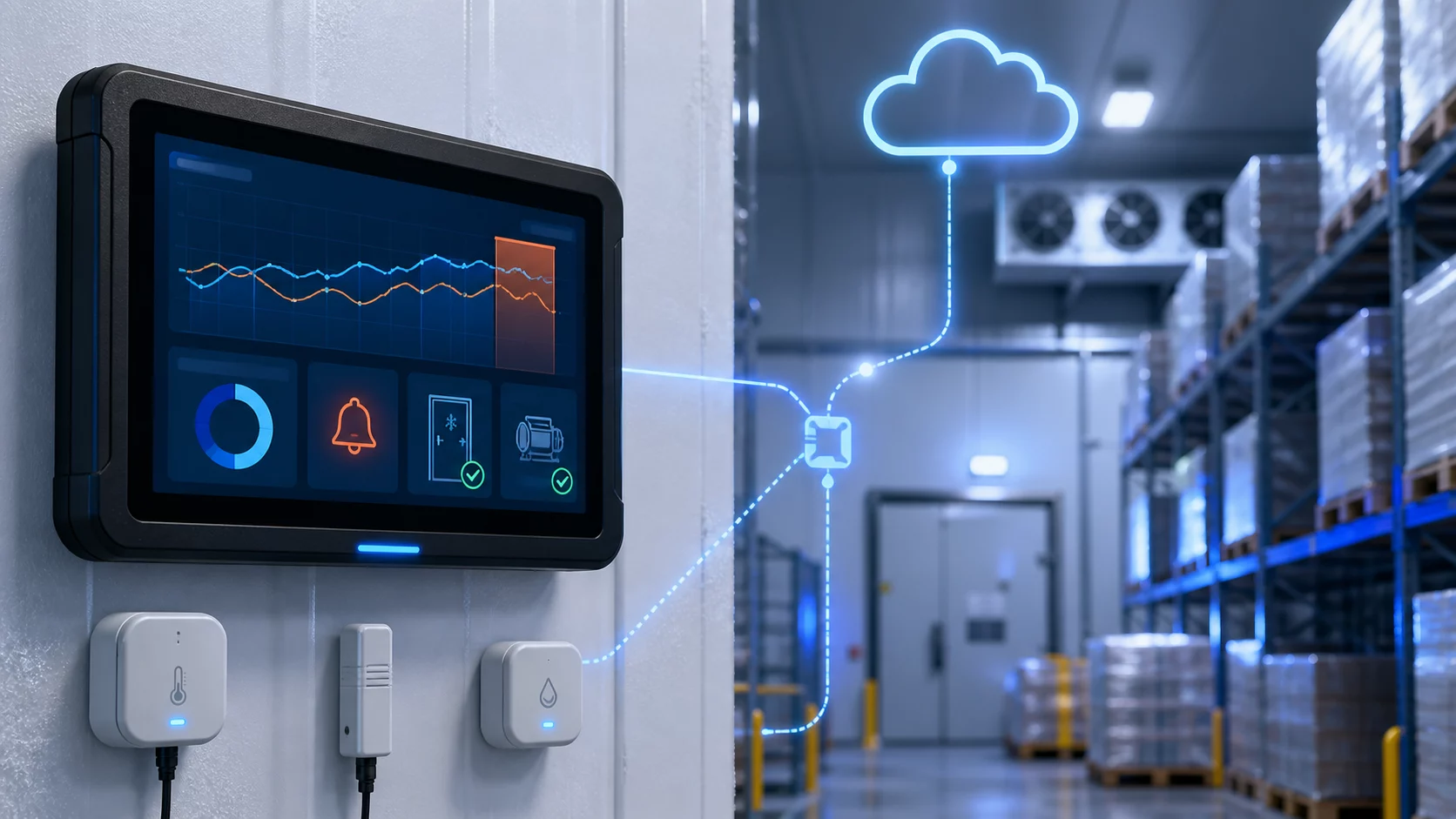
Temperature, humidity, door and equipment data comes to the edge gateway via Modbus RTU/TCP, digital input or manufacturer protocol. Each point is modeled with sensor_id, location, unit, calibration_date, quality and timestamp fields. Gateway samples the raw read according to boundary and change rules; it continues writing to the local database even if there is no network.
Alarm engine and notification chain
Alarm is not just a single threshold. Upper-lower limit, delay, hysteresis, door open time, sensor breakage and equipment status are evaluated together. The event goes through WARNING, ACTIVE, ACKNOWLEDGED and RESOLVED states. SMS, email or mobile notification is sent to the staggered duty list; Delivery, approval and closing times are recorded in the audit log.
Offline recording, reporting and security
The edge device retains measurements even if the cloud connection is lost; When the connection arrives, it completes the missing range with the sequence number. Reports distinguish between device time and server time and subsequently make the change visible. Device certificate, encrypted communication, role-based panel and signed update are applied. Calibration changes are saved with authorized user and document information.
Demo software scenario
Demo; it consists of Modbus sensor simulator, edge gateway, local HMI and cloud panel. The normal temperature trend is monitored, a delayed alarm occurs when the door remains open and the responsible user confirms the alarm. When the internet goes down, the chart continues locally; Post-connection space is completed in the cloud. Sensor breakage is indicated as a technical fault other than the temperature alarm.
Pilot and operation verification
Before the pilot, sensor locations should be determined according to the thermal map and risk points. Alarm lead time, missing data rate, false alarm, device online rate and calibration tracking are measured. Power outage, gateway failure, clock drift, door sensor installation and long-term connection loss are tested. Sectoral registration and calibration obligations should be verified with the business.
Frequently asked questions
If the cloud breaks, will the temperature history be lost?
In the right design, no. Edge gateway buffers data locally and securely completes missing records when the connection returns.
Is one temperature sensor enough?
Often multiple measurement points are required, taking into account warehouse volume, airflow, doors and product placement; the settlement should be determined by field analysis.